
Criminal Court Records in Jefferson County
A criminal court record is the official case file a court opens when someone is accused of a crime. In Jefferson County the file lives with the Court Clerk, who runs the criminal side of the District Court. The case does not begin at the arrest. It begins when the District Attorney files an Information or complaint in District Court. From that point the clerk logs every step: the charges as filed, each court date, every motion, the plea, and the judgment and sentence. Felony files carry a CF prefix. Misdemeanor files carry a CM prefix. The arrest itself is a separate law enforcement record, so a booking does not always mean a court case exists yet.
Jefferson County District Court hears the criminal cases that arise in the county. It is the trial court of general jurisdiction, so both felonies and misdemeanors are filed there in Waurika. Less serious city matters can route through Waurika Municipal Court instead, and those city files are not part of the county District Court record. Criminal appeals do not stay local. A conviction is reviewed by the Oklahoma Court of Criminal Appeals, the state's last-resort court for criminal matters.
Some crimes that touch Jefferson County are prosecuted in federal court rather than state court, and those files sit outside the county system. The U.S. Attorney's Office for the Western District of Oklahoma handles federal criminal cases for this part of the state.
Federal records are searched through PACER, not the Waurika Court Clerk, so a federal case will never show up in a county District Court search.
How to Search Jefferson County Criminal Court Records
Most Jefferson County criminal court records can be pulled online for free. The Oklahoma State Courts Network, known as OSCN, is the main portal, and On Demand Court Records, known as ODCR, is the backup. Both list Jefferson County District Court. OSCN works best when you already hold a case number. ODCR is the stronger tool for a name search.
- Open the OSCN docket search and pick Jefferson County District Court from the court dropdown.
- Enter a defendant name or a case number. A felony number looks like CF-2014-1, and a misdemeanor uses the CM prefix.
- If you have no case number, switch to ODCR, choose Jefferson, and type the party name in Last, First order.
- Open the case to read the docket, the listed charges, and the disposition.
- Ask the Court Clerk for a certified copy when you need the record for a legal purpose.
A statewide criminal history is a different product. The Oklahoma State Bureau of Investigation keeps that record, and it draws on data from many counties at once. For a single case, though, the county docket on OSCN or ODCR is faster and free. A broader look at every Jefferson County case type sits on the county court records page.
Note: Waurika Municipal Court handles many city ordinance and local traffic cases, and those files do not appear in a Jefferson County District Court search.
Stages of a Jefferson County Criminal Case
A criminal case moves through set stages, and each stage drops an entry into the file. Reading those entries in order tells the story of the case. Charges are filed first. Sentencing, when it comes, is last. The clerk timestamps every move, so the docket doubles as a timeline.
Case flow: Charges Filed › Arraignment › Pretrial / Motions › Plea or Trial › Disposition › Sentencing
| Stage | What Happens |
|---|---|
| Charges Filed | The District Attorney files an Information or complaint, which opens the case and sets the counts. |
| Arraignment | The defendant hears the charges and enters a first plea, and the court addresses bond and counsel. |
| Pretrial / Motions | Lawyers file motions, exchange evidence, and argue what a jury can be told. |
| Plea or Trial | Most cases end in a plea, and the rest go to a judge or jury for a verdict. |
| Sentencing | The court sets the penalty, which can be jail, prison, probation, fines, or a deferred term. |
A few terms appear again and again in these files. Their plain meanings make the docket far easier to read.
- Information
- The prosecutor's formal charging document in a state criminal case.
- Count
- One charged offense inside a case; a file can hold several.
- Arraignment
- The first court date, where the defendant hears the charge and enters a plea.
- Plea
- The answer to a charge: guilty, not guilty, or no contest.
- Disposition
- The final result of a charge or of the whole case.
- Deferred sentence
- A penalty delayed under conditions, so the case may be dismissed later.
- Suspended sentence
- A penalty imposed but not served in custody as long as conditions are met.
What a Jefferson County Criminal Court Record Shows
Once the file is open, the same fields appear case after case. The header names the case and the parties. The body logs the charges and how they end. A typical Jefferson County criminal court record lays the data out in a fixed order, which makes it quick to scan once you know the layout.
| Field | What It Shows |
|---|---|
| Case Number | The unique ID and case type; CF marks a felony and CM marks a misdemeanor. |
| Filing Date | The day the District Attorney filed the charges and opened the case. |
| Defendant | The accused person's name, along with any listed attorney. |
| Charges | Each count, the statute alleged, and the offense description. |
| Bond | The amount or conditions set for release, plus any forfeiture entry. |
| Plea | The defendant's answer to each count. |
| Disposition | The final outcome of every charge in the case. |
| Sentence | The penalty imposed, such as prison, probation, fines, or a deferred term. |
Some fields stay hidden. Social Security numbers, financial account numbers, and the names of minors are redacted. A closer look at the charging side of the file, including the statute and count detail, sits on the arrest records and court charges page.
Charges vs. Convictions
A charge is an accusation. A conviction is a proven or admitted result. The gap matters, because a Jefferson County criminal court record can show charges that were dropped, dismissed, or that ended in an acquittal. A name on a filed Information does not mean the person was found guilty. Reading the disposition for each count is the only way to know how a case truly ended.
| Charge | Conviction | |
|---|---|---|
| Stage | Accusation | Verdict or plea |
| Proof Needed | Probable cause | Beyond a reasonable doubt |
| Decided By | Prosecutor's filing | Judge or jury |
| Public Record | Yes | Yes |
| Final? | No, can be amended or dropped | Yes, unless appealed or vacated |
Reading Dispositions and Sentences
The disposition line is the heart of the file. Common entries read guilty, not guilty, dismissed, or nolo contendere, which means no contest. A deferred sentence is its own kind of result. The court delays judgment while the defendant meets conditions, and the case can be dismissed at the end of that term.
The rules for a deferred sentence and its later dismissal are set out in 22 O.S. Section 991c, the Oklahoma statute that governs that pathway.
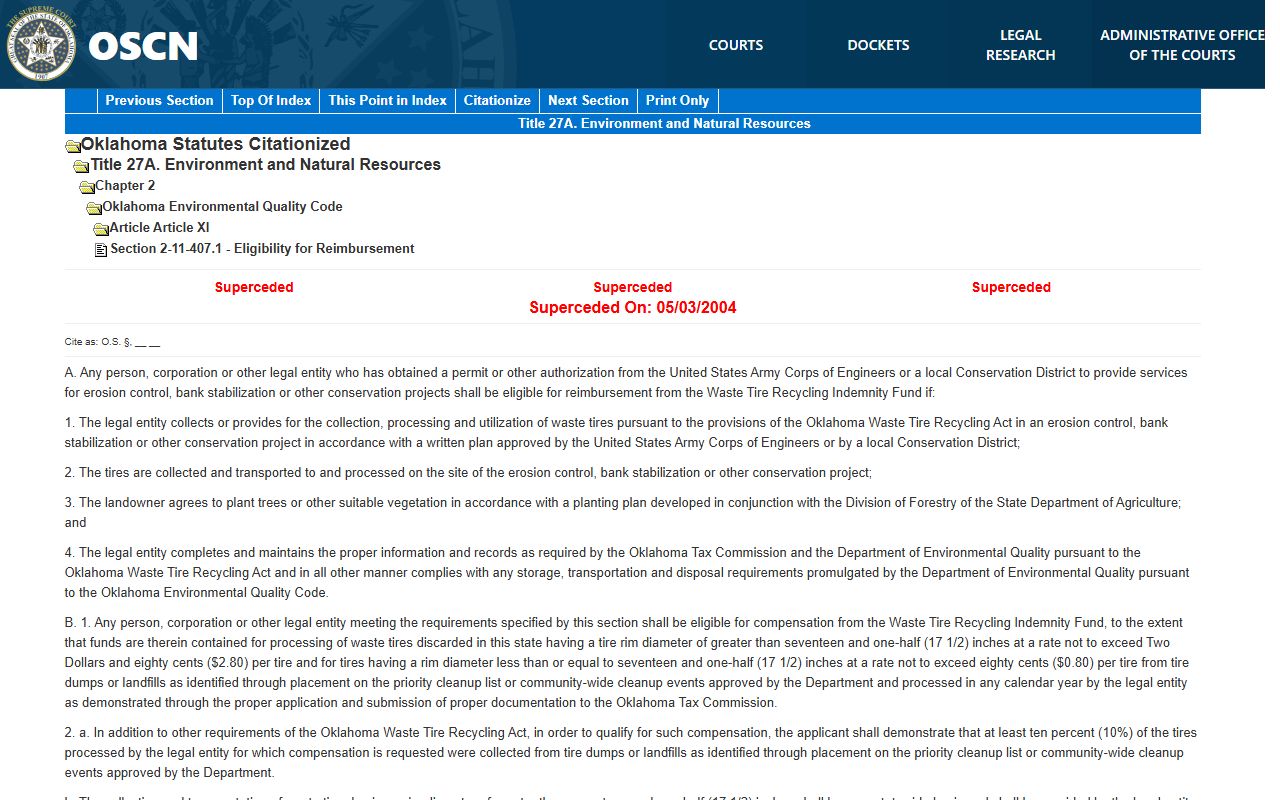
Under that section the court can update the disposition to a dismissal after a not-guilty plea is entered, though the underlying arrest record stays in place unless it is sealed on its own.
A sentence can take several forms. Jail or prison time is one. A suspended sentence is another, where the term is imposed but not served in custody as long as the person follows the rules. Probation, fines, court costs, and restitution often appear together. The record spells out the length and the conditions, so the sentence line is worth reading in full.
Note: Online payment of a fine can record a conviction, so call the Court Clerk before paying if the result could affect your license or record.
Sealed vs. Expunged Records
Not every criminal record stays public forever. Oklahoma law lets some records be sealed or expunged, which limits or ends public access. The two terms are not the same, and the gap between them changes who can still see the file. Eligibility is narrow and turns on the charge, the outcome, and the time that has passed.
Eligibility for sealing an arrest record is listed in 22 O.S. Section 18, which sets out the categories that qualify.
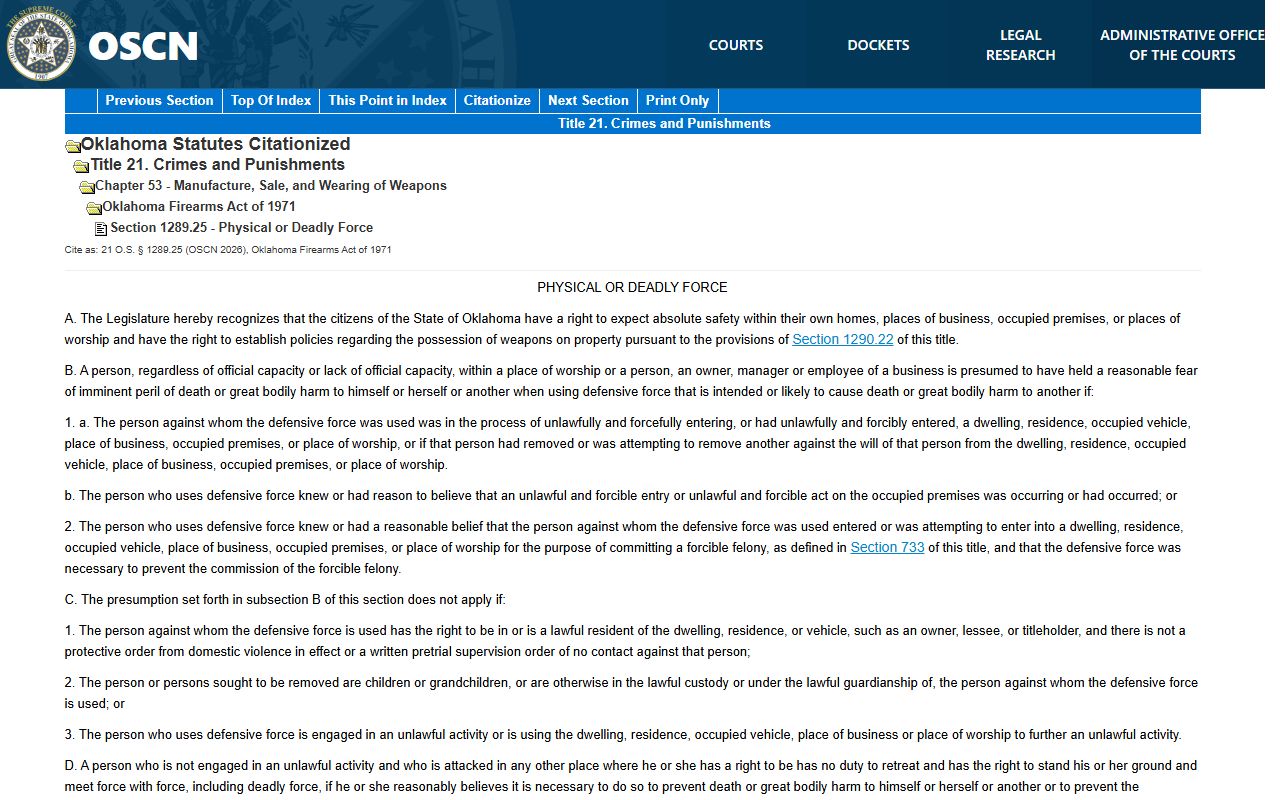
That statute can reach an entire arrest record, not just the court file, when a case fits one of its listed categories.
| Sealed | Expunged | |
|---|---|---|
| Visibility | Hidden from public view | Sealed as if it never happened |
| Law Enforcement | Some agencies keep limited access | Access is very limited |
| Reaches Arrest Record | Not always; a deferred dismissal can leave it in place | Yes, a full Section 18 expungement can |
| Cost | Court-record expungement is free | Arrest-record expungement adds a $150 OSBI fee |
Expunging Jefferson County Criminal Records
An expungement starts in the county where the case happened. A Jefferson County petitioner files in District Court and gives notice to the agencies that hold the record, including the District Attorney, the arresting agency, and the OSBI. The court then decides whether the case qualifies.
- Confirm the case fits a Section 18 category before filing.
- File the petition in Jefferson County District Court and serve notice on the OSBI, the District Attorney, and the arresting agency.
- Attend the hearing, where the court weighs the request.
- If the order is granted, deliver a certified copy to the OSBI.
- Pay the $150 OSBI processing fee for an arrest-record expungement by cashier's check or money order, since personal checks are not accepted.
The OSBI expungement FAQ is the clearest official guide to the fees and the timing.
OSBI notes that court-record expungement is free, that arrest-record expungement carries the $150 fee, and that processing takes about a month after it receives the certified order. The Court Clerk in Waurika can confirm current local filing details at 580-228-2961.
Note: Arrests in two different counties need two separate petitions, while several arrests in Jefferson County alone can be combined into one.
Public Access to Jefferson County Criminal Records
Oklahoma treats court records as public by default. The Open Records Act backs that policy, and most criminal case files in Jefferson County can be inspected by anyone. Access has limits, though. Law enforcement investigative files, juvenile matters, and sealed cases sit outside the public view. Basic arrest and booking facts are open, but the deeper investigative narrative often is not.
Key Statutes:
51 O.S. Section 24A.8 - Makes basic arrest, jail, and incident information open while protecting active investigative files.
51 O.S. Section 24A.2 - States the Open Records Act policy that government records stay open so the public can review official business.
When a court does seal a file, the effect and the procedure follow 22 O.S. Section 19.
After that order, the once-public docket entries are pulled from open view, which is why a sealed case can vanish from an OSCN or ODCR search.
Background Check Considerations
A casual record lookup and a formal background check are not the same thing. Anyone can read a public Jefferson County docket. A background check used for hiring, housing, or credit is governed by the federal Fair Credit Reporting Act, and those reports must come from a licensed consumer reporting agency. A free docket search is fine for personal knowledge. It is not a substitute for a compliant report when the law requires one.
Important: This site is not a consumer reporting agency under the FCRA, and its information cannot be used for employment, tenant, credit, or insurance screening.
Restricted Criminal Court Records in Jefferson County
Some criminal matters never reach the public docket. Juvenile cases are confidential under Oklahoma law, so a youthful offender file usually will not appear in a public search. Sealed and expunged cases drop out of view once a court orders it. Active search warrants can stay sealed while an investigation runs. Adoption and mental-health records are restricted as well. A blank search result does not always prove that no case exists.
A criminal file often points to other records. An open warrant tied to a missed court date shows up as a docket entry such as failure to appear or bench warrant. Those active orders are confirmed through the issuing court or the sheriff, not through a third-party database.